Alien Federation research team
Research
The Alien Federation research team finds phenomena in public satellite data and publishes them as preprints. Current work focuses on Antarctic subglacial hydrology: active lakes beneath the ice sheet that are not in existing inventories, independently identified and documented in NASA ICESat-2 laser altimetry and the Reference Elevation Model of Antarctica (REMA).
Research areas
Antarctic subglacial hydrology
Active subglacial lakes inferred from ice-surface rise and fall in public altimetry and stereo elevation models. This is the team’s current area of work.
Featured findings
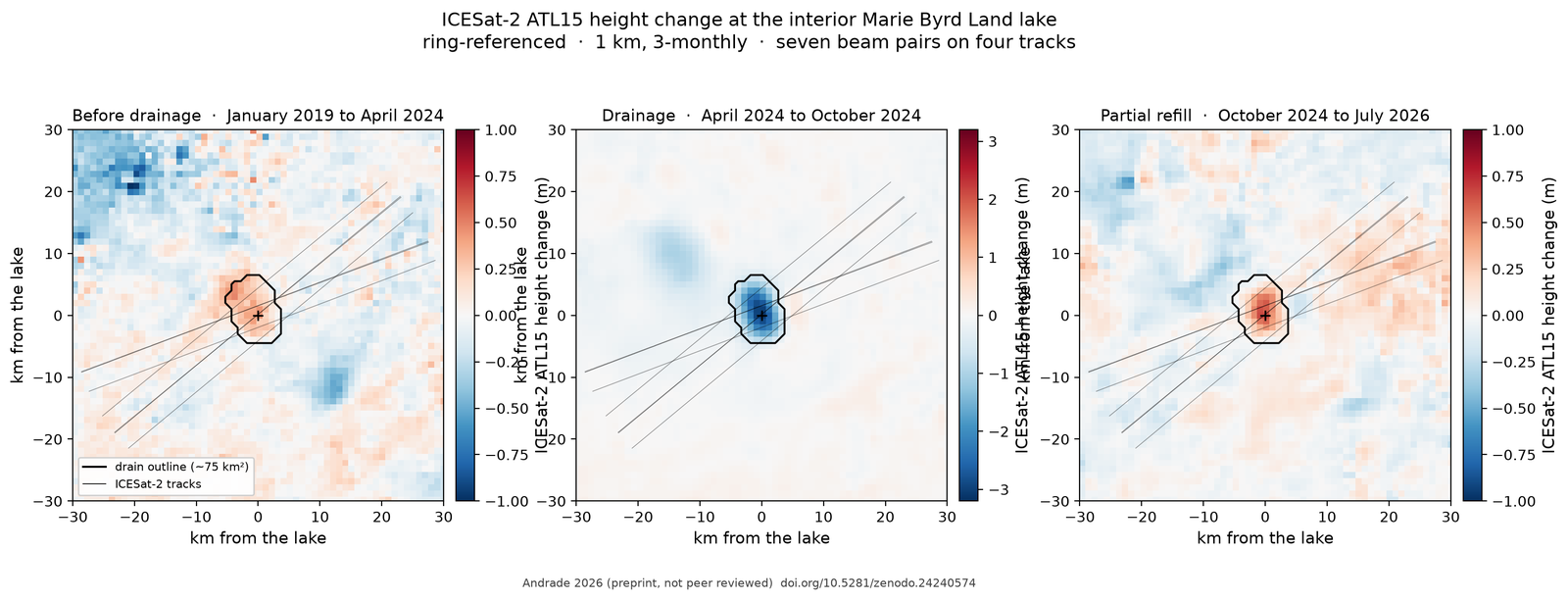
Marie Byrd Land · West Antarctica
Abrupt 2024 drainage of a previously uncatalogued active subglacial lake beneath slow, 2.7 km thick ice in interior Marie Byrd Land, West Antarctica
A previously uncatalogued lake under about 2.7 km of slow-moving ice in interior Marie Byrd Land. The surface dropped 3.0 m between 6 April and 5 July 2024.
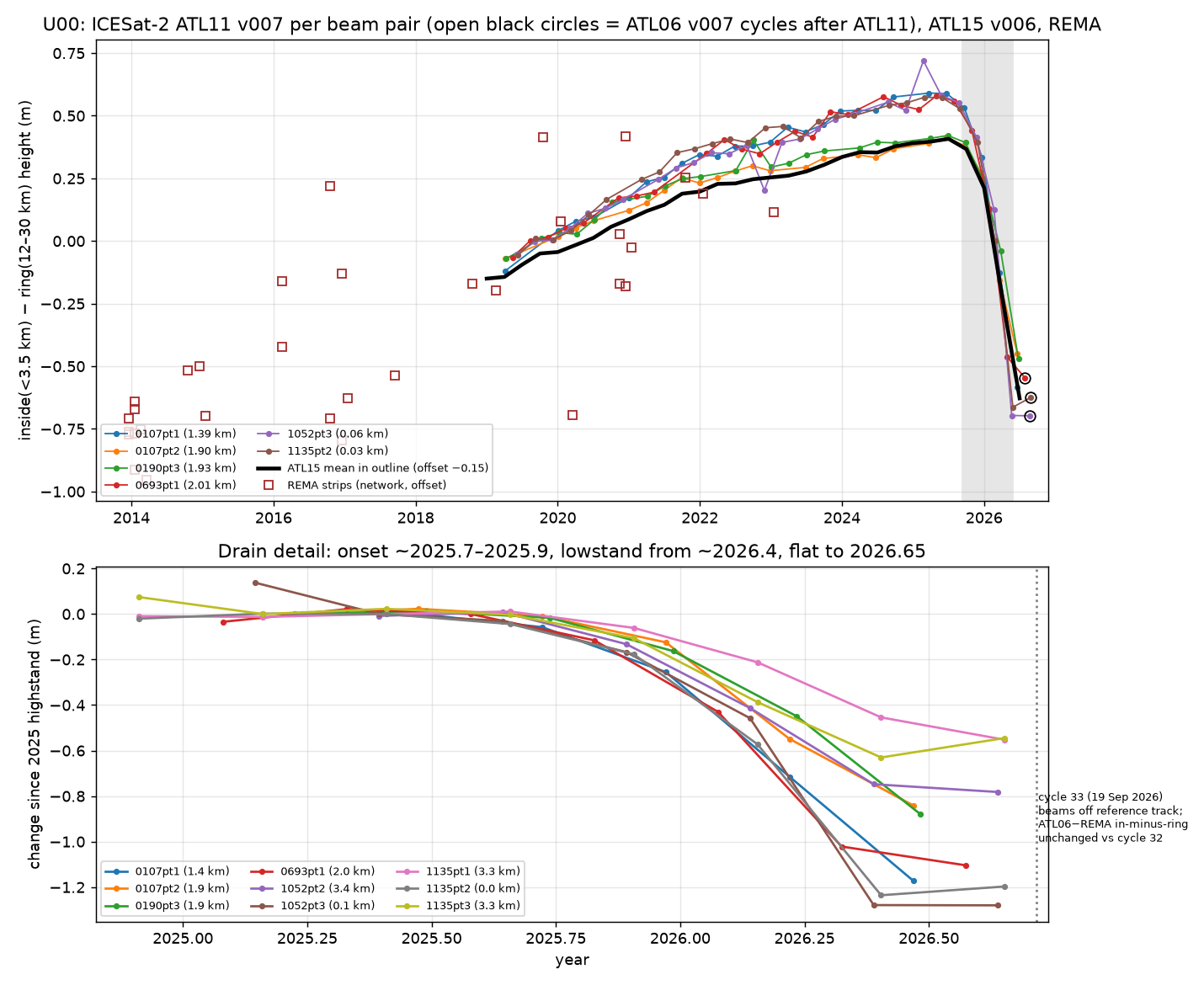
U00 · Western Dronning Maud Land, East Antarctica
A complete fill–drain cycle of a previously uncatalogued active subglacial lake beneath slow-moving plateau ice in western Dronning Maud Land, East Antarctica (2014–2026)
A previously uncatalogued lake under 2.7–3.0 km of slow-moving ice: a rise of 0.86–0.88 m between 2019 and mid-2025, then a 1.8 m drain between September–November 2025 and late May 2026.
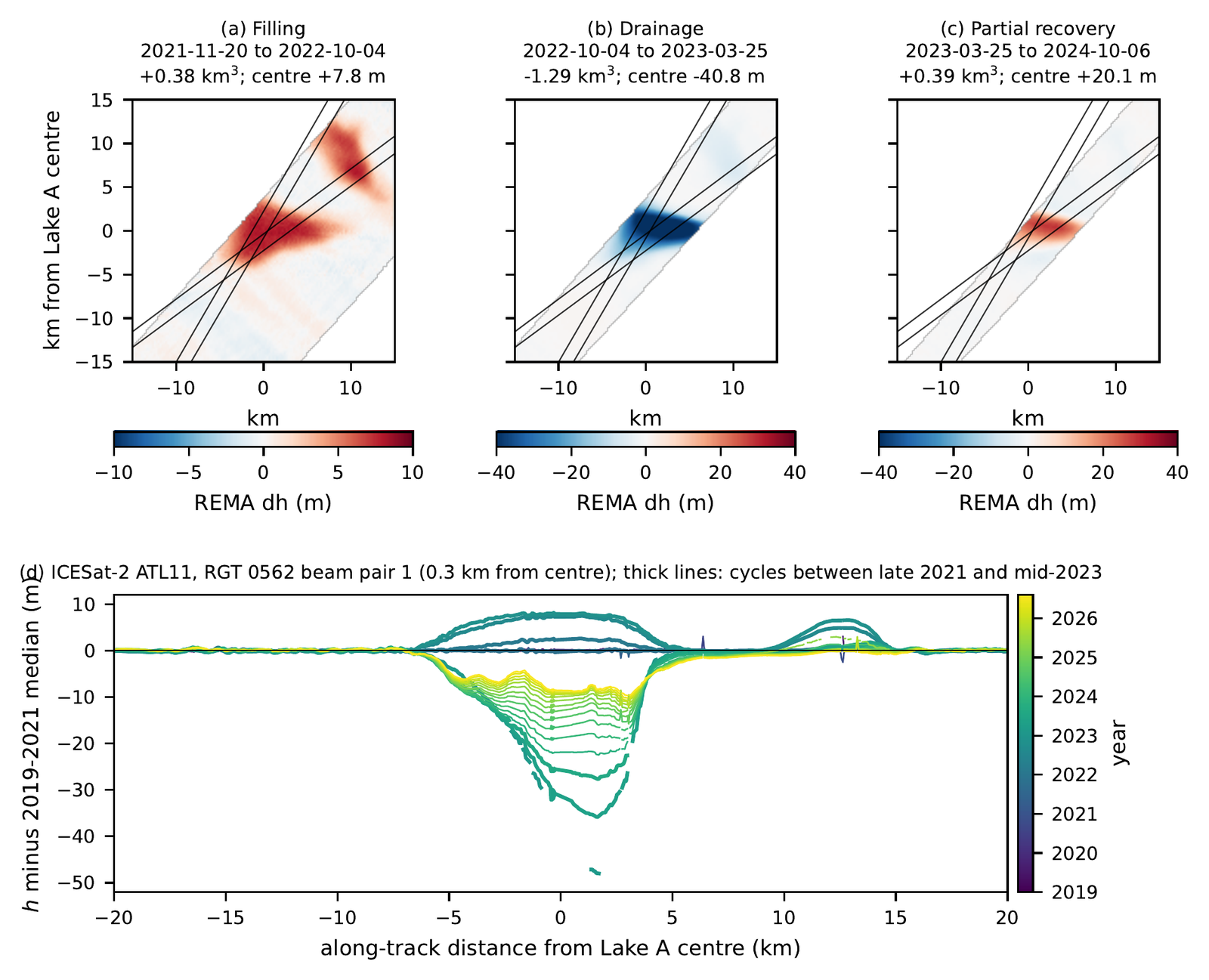
MacAyeal Ice Stream · West Antarctica
Filling and ~41 m collapse of a previously uncatalogued subglacial lake at the head of MacAyeal Ice Stream, West Antarctica (2021–2023)
A previously uncatalogued lake filled, then the surface collapsed by ~41 m. By October 2024 nearly half of the lost volume had been regained.
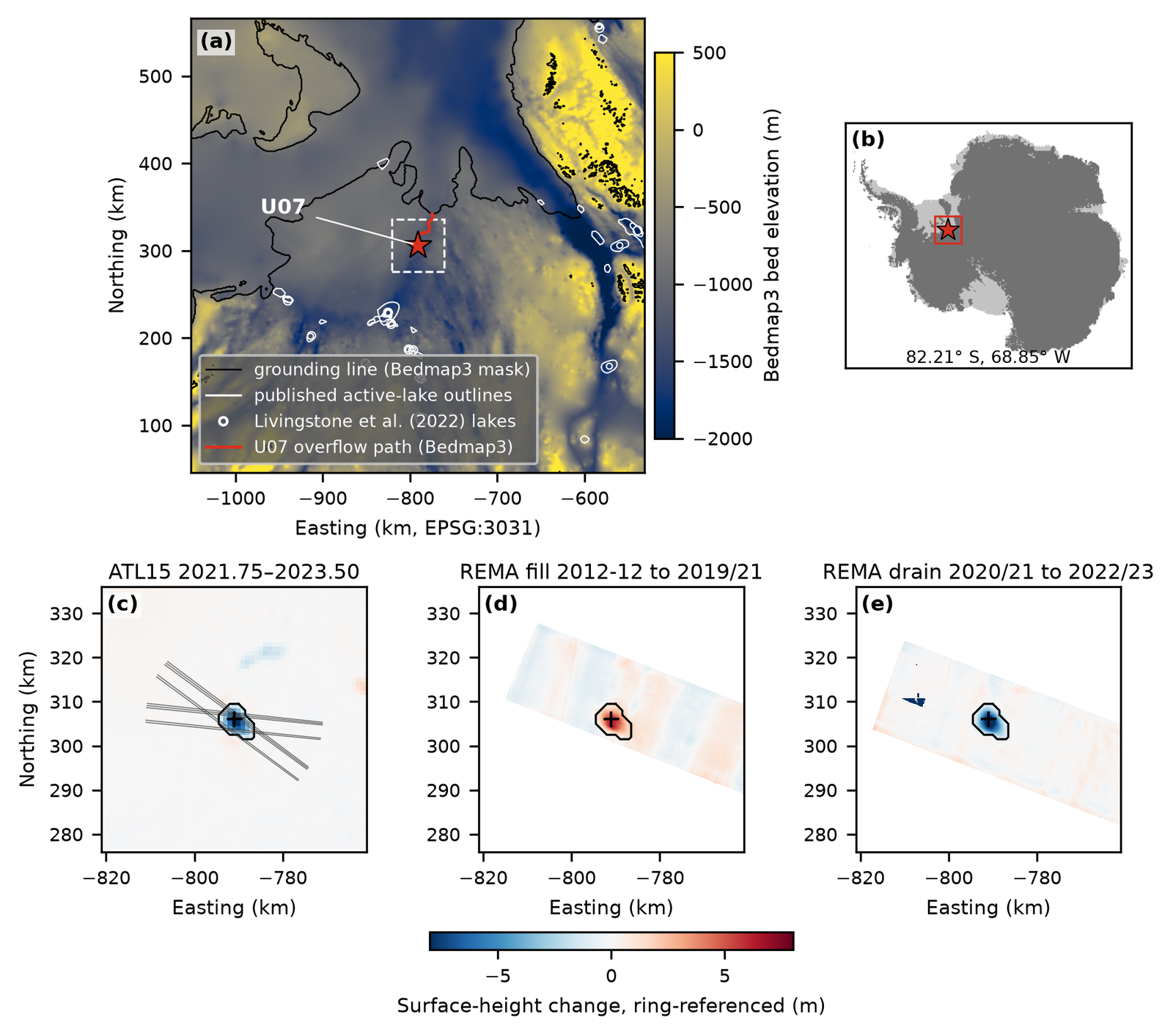
U07 · Upper Institute Ice Stream, West Antarctica
Brief communication: An active subglacial lake beneath the upper Institute Ice Stream, West Antarctica, missing from existing inventories
A previously uncatalogued lake on the upper Institute Ice Stream. The surface sank 8.7 ± 0.5 m between late 2021 and mid-2023.
Team
Work is credited to the Alien Federation research team. Findings on this site are preprints and have not been peer reviewed.
Questions about the research? Email us.